Leaderboard



Popular Content
Showing content with the highest reputation since 03/03/2025 in all areas
-
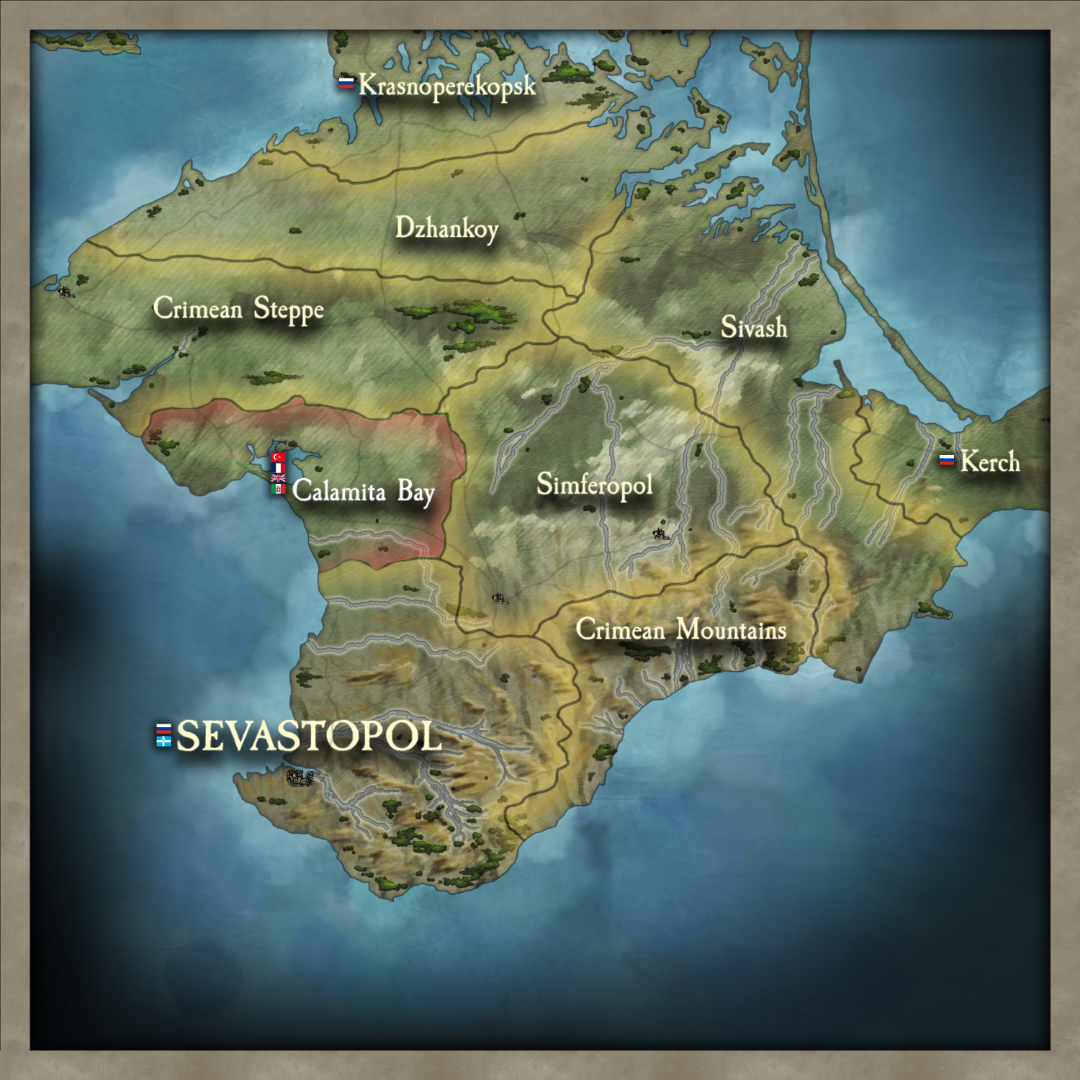
It is a dry morning in Sevastopol. The air smells of ash and smoke: peasants carry bodies off to burial, and church bells ring for the many thousands who gave their lives defending the city. Four flags adorn the walls: those of Britain, France, the Ottomans and Sardinia. They are the victors. Two years of bloodshed, disease and suffering have come to an end as the last Russian detachments are driven off from the outer walls. Sporadic rifle fire is heard from the woods surrounding the city, but the Russians have had enough. The Crimean steppe lay open as the defeated Russian army limps away: their effort to break the blockade, though valiant, comes to naught. The Tzar and his ministers decide to cut their losses and sue for peace. On a cold night in Paris, they give away vast swathes of land to Moldavia. Their warships are barred from sailing the Black Sea, and their influence in the Danubian Principalities are greatly diminished. Russia is humiliated. The Bear has lost scores of her sons. The victors too, have suffered. The Ottomans have managed to extend their lifespan for a few more decades, but at what cost? They are now indebted to the Great Powers, and they will certainly be wanting their cut. France has humiliated Russia, but a strong Prussia now looms on the border. Britain has restored the concert of Europe, but they've also gone through several government crises. Sardinia has impressed the Great Powers in her quest to unify Italy. Nobody knows what the future holds, but one thing is for certain - the war is over.5 points
-
THE EMPIRE STRIKES BACK!! That's right folks, the NWRP NAPOLEONIC WARS CAMPAIGN IS BACK, coming THIS WEEK, April 5 & 6 - We've got NEW MAPS, and changes to balancing - There will be two battles per week on the Napoleonic_Role_Play server we all know and love - No sieges for the first month So make sure to join us for the return of battles!!3 points
-
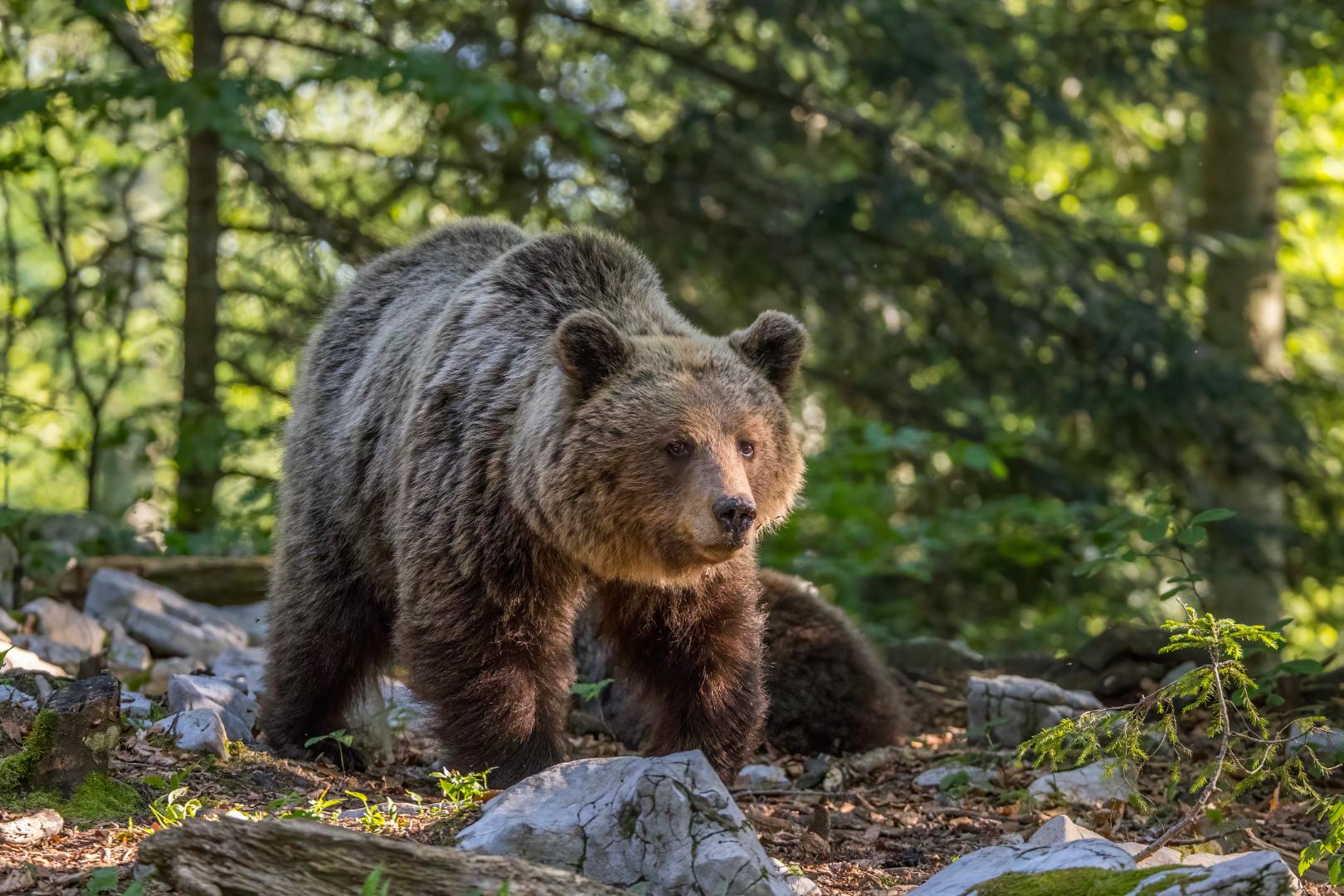
Slavic, Germanic, Baltic, Celtic languages, and even partially Indo-Iranian ones lost the original word for „bear”. Most European peoples believed that saying something could make it appear. Even today some people react negatively when someone mentions death around a proverbial family hearth. That is why many euphemisms arose. One will likely hear that someone „passed away” or „is no longer with us”, although the more precise and unambiguous statement is simply that „death met them”. However, in this case we are not dealing with the disappearance of information, only with the creation of new expressions. This phenomenon was mainly caused by fear of this powerful animal. After all, it is faster, larger, stronger, and better equipped for fighting than we are. When taken by surprise, humans have no chance against this shaggy beast, so the threat it posed was much greater than, for example, invoking an individual’s death. But let us move on to the title of this topic. Different peoples found interesting ways to avoid „summoning” the bear: Slavic languages (Czech: medvěd | Russian & Serbian: medved) Here, the animal was described not by its appearance, but by its habit - eating honey: „the one eating honey”. Germanic languages (English: bear | German: Bär | Dutch: beer | Scandinavian: björn, bjørn) Instead of using the actual name of the animal, these peoples decided it was wiser to call it „the brown one”. Baltic languages (Lithuanian: meška | Latvian: lācis) In Lithuanian it most likely meant something like „soft creature” because of its fur. Latvian etymology is unclear, but we know it is not derived from the original word. Celtic languages (Welsh: arth | Breton: arzh | Irish: mathúin) Folk etymology in Welsh and Breton connects these with „strong” or „manly”. Irish mathúin means „fat”, literally „well-fat”. Uralic languages (Finnish: karhu | Estonian: karu) Here we find the meaning „rough” or „coarse”. I continue circling around the title of this thread, but only now can I fully address it. There is a reason why I skipped Polish among the Slavic languages. The Lechitic peoples went a step further. After all, the beast or the forces that bring it could figure out whom one means by saying „the one eating honey”. Bears are known for that, and there are no honey badgers in Europe. Therefore, at some point people began to say „niedźwiedź”. „-dźwiedź” corresponds to Slavic medved, „nie” is a negation. So that is how we get „the one who does NOT eat honey”.
 2 points
 -
In this devblog you’ll find a quick summary of the Campaign 10 rules and a brief introduction to the factions taking part FACTIONS The Alliance was a coalition of the Ottoman Empire, the United Kingdom, France, and later Sardinia, united in their determination to curb Russian expansion and preserve the balance of power in Europe. Their combined forces present a formidable challenge to Russian ambitions on the Black Sea. The Russian Empire entered the Crimean War seeking to expand its influence over the declining Ottoman Empire and to secure dominance in the Black Sea region. Led by Tsar Nicholas I, Russia presents itself as the protector of Orthodox Christians within Ottoman lands, but its ambitions do not bode well for the other European powers. With its vast manpower and resilient army, Russia now challenges the might of the Western alliance… Each faction is led by a faction leader and a deputy. They move armies on the gameboard and play the role of their character outside battles. In battles, factions are led by a General and a team of officers. The Campaign Map ARMIES Each turn, a faction may move their army. An army is only able to move to an adjacent province. Both factions submit their moves simultaneously and in secret, creating a fog of war effect. If an army enters a province with an enemy army, a battle is triggered. If the province is unoccupied, the faction captures it without battle. GARRISONS Each faction may place two garrisons during the Campaign. A garrison may only be placed in the province where the army is currently standing, and no province may contain more than one garrison. An army can move and deploy a garrison in the same turn. Garrisons are revealed publicly after the turn’s moves have been declared. An army must hold a garrisoned tile for two turns in order to seize control of it. Once a garrison is captured, it is permanently removed from the Campaign and cannot be replaced. VICTORY CONDITIONS Factions receive Victory Points (VP) for owning tiles. Sevastopol is worth 3 VP, while other tiles 1 VP each. After 8 weeks, the number of VP for each faction is summed. The faction with the most VP wins the Campaign. The full version of the rules can be found here (click)
2 points
-
The Campaign is on hold until April 5th2 points
-
Didn't ask.1 point
-
1 point
-
1 point
-
1 point
-
maybe if you spent more time playing M&B and less time hanging with my mom, you wouldnt be such a total NOOB1 point